VB-2017
Available now
In the workshop 41 days
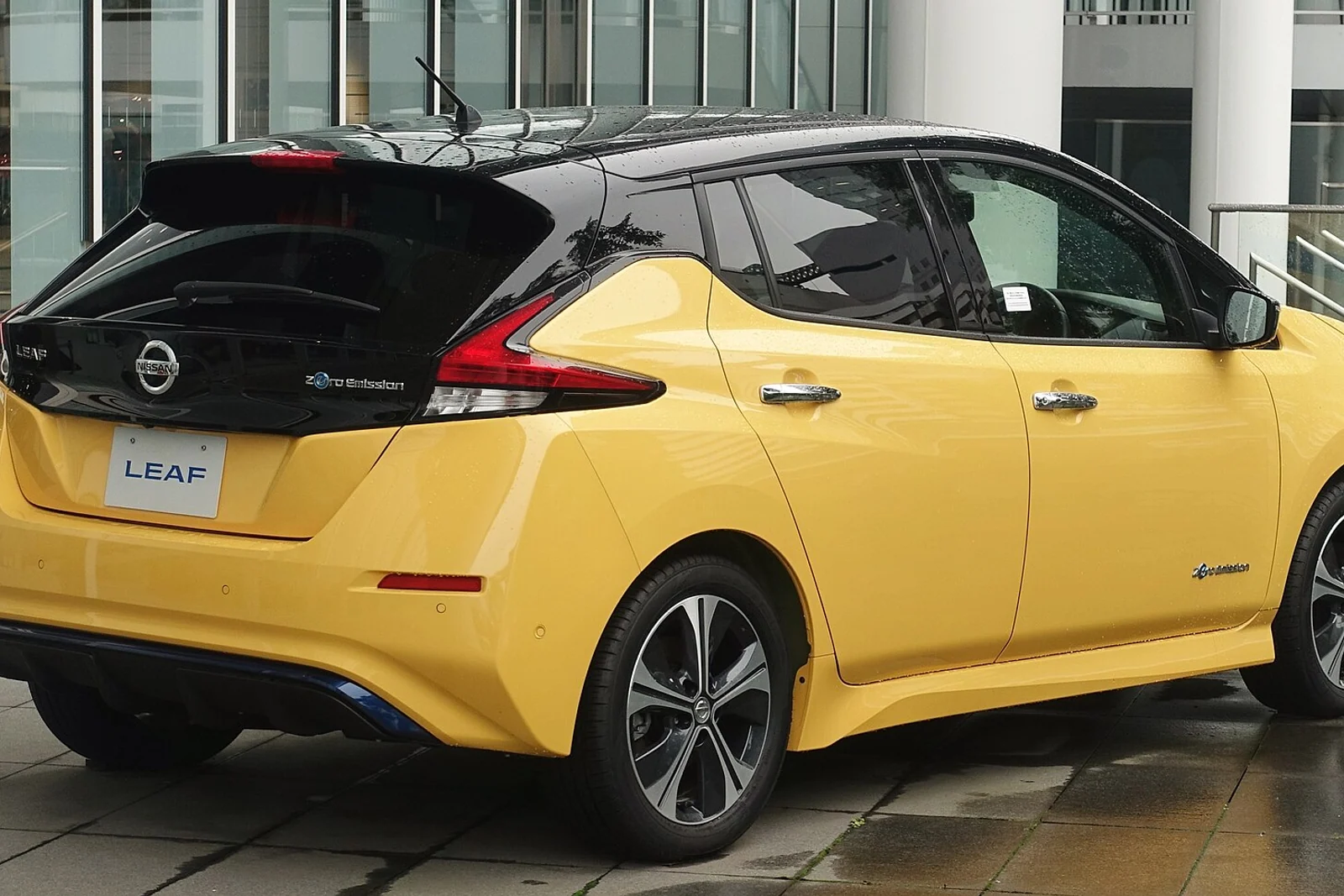
2019 Nissan Leaf SV PLUS

Asking price
$12,900
vs market
-1%
Range, rated against measured
Measured on our 60-mile mixed loop, September, 88 °F. Winter in a northern state costs another 15–25%.
Battery report
89% of new capacity
- Battery & BMS 89
- Drive units 90
- Suspension 85
- Brakes & regen 87
- Body & paint 86
- Interior 84
- Software & charging 86
Charging
100 kW peak
10–80% takes about 45 minutes on a charger that can supply 100 kW or more.
Onboard AC charger 6.6 kW — a full night on a 240 V wall unit
Battery replacement
$9,800
Current cost of a replacement pack or module set for this model, fitted. We publish it so you can do the arithmetic before you buy, not after.
8 years / 100,000 miles on the battery — transfers
Running cost
3.5 mi/kWh
Efficiency from the EPA rating and usable battery capacity. At Florida electricity prices that is about $4 per 100 miles of home charging — roughly a third of what a petrol equivalent costs to run.
Service costs are lower too: no oil, no belts, and brake wear is halved by regenerative braking.
Condition
87/100
Seven measured systems, including the battery and the charging hardware. Red-flag items are either corrected before listing or written into the defect log with the price consequence stated.
Honest condition for the mileage — priced accordingly.
5 findings, published
3 moderate
- Moderate Battery health 89% — 11 bars of 12 on the dashboard display Disclosed, priced in
- Moderate Quick-charge overheating campaign 24V-700 — battery software update Applied at a Nissan dealer; invoice in the file
- Moderate CHAdeMO DC inlet rather than CCS Disclosed — adapters are scarce, plan around home charging
- Minor Rear hatch struts weak in cold Replaced
- Minor Driver door window regulator noisy Cleaned and lubricated
Specification
1N4AZ1CP•••••338
- Stock
- VB-2017
- Battery
- 62 kWh · health 89%
- EPA range
- 215 mi
- Measured range
- 197 mi (September, 88 °F)
- DC charging
- 100 kW · 10–80% in 45 min
- Onboard charger
- 6.6 kW AC
- Power
- 214 hp · 250 lb-ft
- 0–60 mph
- 6.8 s
- Drive
- FWD · 5 seats
- Curb weight
- 3,811 lb
- Odometer
- 44,150 mi
- Exterior
- Yellow
- Interior
- Charcoal cloth
- VIN (masked)
- 1N4AZ1CP•••••338
- Title
- Clean · Florida, in hand
- Previous owners
- 2
- Days on lot
- 41
Service history
3 records
- Battery health cycle, rapid-charge test, 12V battery 44,150 mi · In-house bay
- Brake fluid, cabin filter, tyre rotation 38,900 mi · Nissan dealer
- Battery software update under campaign 24V-700, quick-charge test 34,800 mi · Nissan dealer
Highlights
- The cheapest full electric car on the lot with a 200-mile class battery
- Air-cooled pack with no active thermal management: the honest reason Leaf batteries age faster than liquid-cooled rivals, and it is priced in here
- Honest limitation published: CHAdeMO, not CCS
Inspector's notes
This is a great second car and a poor only car, and we write that on the listing. Home charging makes it excellent; public charging on this connector makes it tiresome.
Battery at 89% is priced into the asking figure — compare it against the 2020 Niro at 93% before you decide.
The 215-mile rating is the SV/SL PLUS figure. The 226 miles Nissan quotes for 2019 belongs to the S PLUS, and no amount of brochure reading changes that.
Campaign 24V-700 covers quick-charge overheating on this pack and is done here. A car with it open should not be quick-charged at all, so ask the question if you shop elsewhere.
Fast charging throttles hard once the pack is warm, so a long trip on this car is slower than the 45-minute headline suggests. Home charging is where it makes sense.
Battery is listed at 62 kWh, the only figure Nissan publishes; there is no published usable number and no reliable independent one we could verify.
Verified data
Factory figures, checked.
Range, efficiency, battery capacity, charging power and dimensions come from the manufacturer and the EPA rather than from a listing aggregator. Where a figure could not be verified we leave it out and say so.
Manufacturer & EPA
- Battery
- 62 kWh pack (Nissan publishes one figure — no separate usable rating)
- EPA range
- 215 mi — the 226-mile figure Nissan quotes belongs to the S PLUS, not this trim
- EPA efficiency
- 104 MPGe combined · 114 city / 94 highway
- DC fast charging
- 100 kW CHAdeMO peak — 45 minutes to 80% per Nissan
- Onboard charger
- 6.6 kW AC (6.0 kW output) — about 11.5 hours from empty
- Power
- 214 hp · 250 lb-ft
- 0–60 mph
- 6.8 s (Car and Driver instrumented test)
- Curb weight
- 3,811 lb (Car and Driver weighed its test car at 3,831 lb)
- Drive
- FWD · 5 seats · no front trunk · CHAdeMO inlet, not CCS
- Cargo
- 23.6 cu ft behind the second row per Nissan (Car and Driver quotes 24 cu ft in text, 23.6 in its own spec panel)
- Dimensions
- 176.4 in long · 70.5 wide · 61.4 high · 106.3 in wheelbase
- NHTSA overall
- Not rated — NHTSA records this car as Not Rated in every category
Model watch list
What this generation is known for.
Documented faults for this exact year and powertrain, listed whether or not this particular car shows them — the recall or service bulletin is named so you can check it yourself.
- The high-voltage battery can overheat during CHAdeMO quick charging, risking smoke and fire — recall 24V-700 (Nissan R24B2/P4A38/P5A22), 25,704 cars, remedied by a battery software update; Transport Canada told owners not to quick-charge until repaired
- Fast charging throttles hard on this pack when it is warm — the behaviour owners call Rapidgate, confirmed by independent testing of the 62 kWh car
- Accelerated battery degradation from the air-cooled design is a design characteristic, not a defect finding, and no recall covers it
- Two further campaigns apply: 23V-494 (unintended acceleration if the drive mode is changed after cruise control) and 24V-071 (rear camera image can be lost)
Notes on the data
- Nissan does not publish a usable capacity, so 62 kWh is pack energy rather than what the car will actually deliver.
- The pack is air-cooled with no active thermal management, which is why Leaf batteries age faster than liquid-cooled rivals and why repeated fast charging slows down.
- CHAdeMO is the practical problem with this car in the US: the connector is being abandoned, so home charging is what makes it work.
- Nissan did not upsize the onboard charger for the Plus, so a full charge at home takes most of a night.
- At about 45,000 miles US asks run roughly $10,500–$15,500; this is the weakest-anchored band here because it covers every Leaf trim, and the SV PLUS sits above the model median.